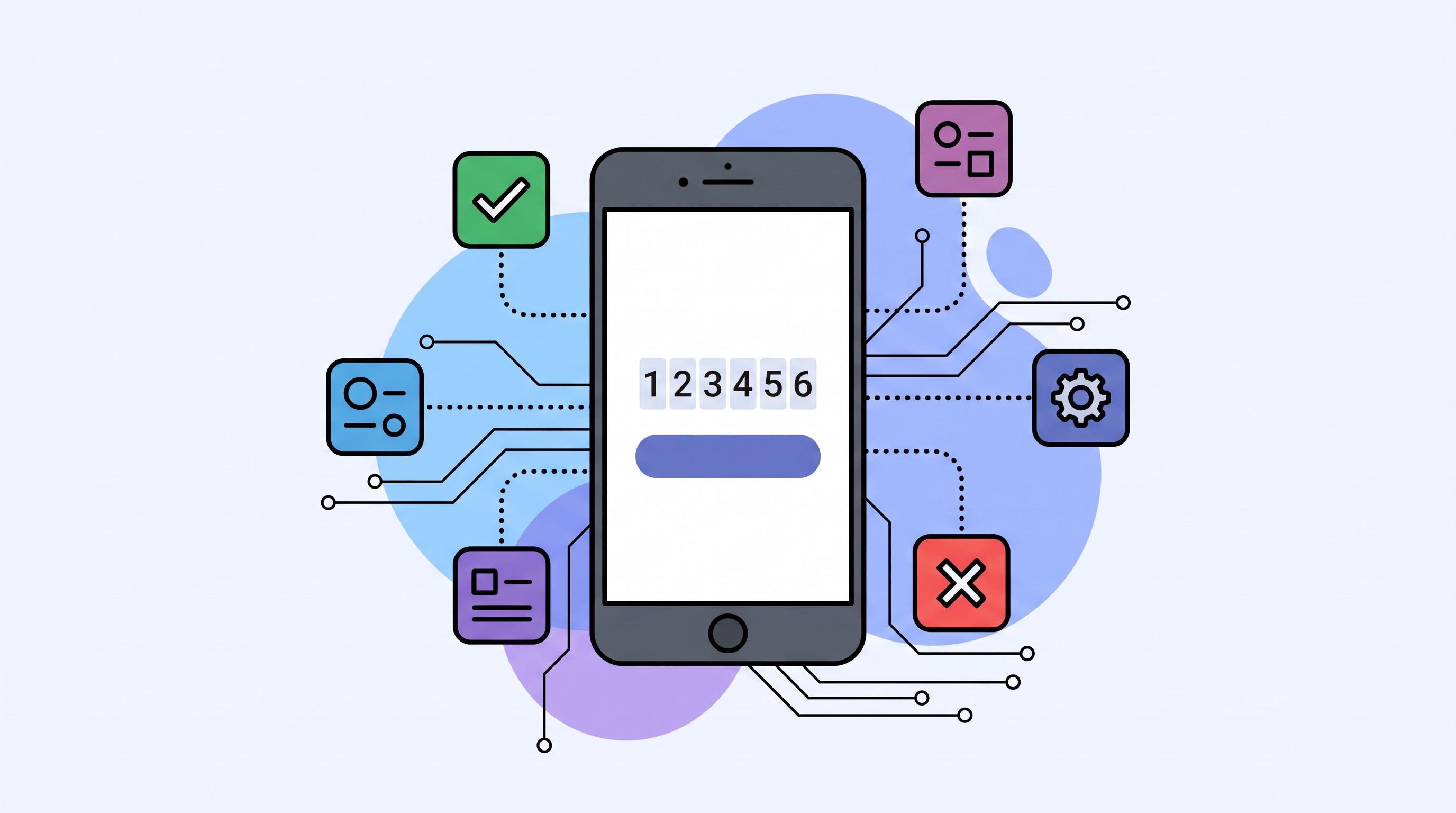
Temporary OTP Numbers That Work With Major Apps
You buy a number, drop it into the sign-up field, tap "send code," and then wait. Thirty seconds pass. A minute. Nothing arrives. Or worse — the app flags the number before it even tries, with a flat "this number can't be used for verification." You've spent money and gotten nowhere, and you still don't know if the problem is the number, the app, or something in between.
That failure is common enough to be its own category of complaint among people who use temporary numbers regularly. It's also almost always explainable. Verification compatibility isn't random — it comes down to where the number originates, how it's provisioned, which country it's registered in, and whether it's been used before. Understanding those factors is the difference between guessing and picking an OTP number that works with major apps on the first try.
Why Verification Compatibility Varies Between Platforms
Every app that sends a one-time password relies on a different mix of carrier routes, anti-fraud vendors, and internal risk rules to decide whether a number is worth trusting. There's no single industry standard for what makes a number "acceptable" — Telegram's verification pipeline doesn't check numbers the same way PayPal's does, and Google's isn't identical to Discord's.
Some platforms only check that a number is reachable and let the SMS through. Others run the number against databases that flag ranges associated with virtual providers, prepaid blocks, or known abuse. A number that sails through Viber might get bounced by a dating app that's dealing with heavy fake-account traffic. This is normal, not a sign that a specific number or provider is broken — it's the predictable result of every platform building its own fraud model.
App-Specific Restrictions: Some Platforms Are Stricter Than Others
Not all major apps treat virtual or temporary numbers the same way, and the gap can be large. Messaging apps like WhatsApp and Telegram generally verify a huge volume of new numbers daily and tend to be more permissive, provided the number itself is clean. Financial and payment platforms — PayPal is the obvious example — apply tighter scrutiny because the cost of a fraudulent account is higher, so their number-screening is more conservative.
Social and dating apps sit somewhere in the middle, and policies shift over time as platforms respond to spam waves. A platform that accepted a given number range last month might tighten its filters next month without any public announcement. This is why guides (including this one) can describe general patterns but can't promise a specific platform will always behave a specific way — restrictions are platform-side decisions, and they change at the platform's discretion.
What Actually Affects SMS Delivery
Even when a platform is willing to accept a given number, the code still has to physically arrive, and several things affect that:
- Carrier routing. SMS travels through a chain of carrier interconnects before it reaches a handset (or, in the case of a virtual number, a digital inbox). A weak or congested route can delay or drop a message.
- Number type. Numbers issued from real mobile carrier allocations tend to route more reliably than numbers pulled from shared VoIP pools, because they look identical to a normal consumer SIM from the platform's perspective.
- Sender ID filtering. Some destination carriers filter messages from certain international short codes or alphanumeric senders, which can silently swallow a code before it ever reaches the number.
- Timing and retries. Verification codes typically expire in minutes. A delayed message that arrives after the code window closes is functionally the same as one that never arrived.
- Volume on the receiving number. A number that's fielded a very high volume of verification texts recently can get deprioritized by some carrier filters, even if it isn't blocked outright.
None of this is unique to any one provider — it's how SMS infrastructure works generally, and it's a big part of why the same phone number can behave differently on different days or through different underlying carrier routes.
Country Availability: Why Picking the Right Country Improves Your Odds
The country a number comes from matters more than most people expect. Some platforms apply different verification rules by region — a country with a strong track record of low SMS fraud typically gets treated more leniently than one associated with high volumes of abuse. Carrier infrastructure quality also varies by country, which directly affects delivery speed and reliability.
Practically, this means the "best" country for a given verification isn't always the one that matches your actual location — it's the one with a track record of reliable delivery for the specific app you're verifying. Services that let you see live country availability before you buy, rather than assigning one blindly, make it easier to pick a starting point that's more likely to work. Keep in mind that once a number is purchased, you generally can't swap its country afterward, so this choice is worth making before checkout, not after a failed attempt.
Number Recycling: Why Previously-Used Numbers Get Flagged
Phone numbers are a finite resource, and most number-based services — carriers and virtual number providers alike — eventually recycle numbers that go inactive so they can be reassigned. This is standard across the telecom industry, not specific to any one company. The catch is that if a previous holder used a number for a lot of registrations, or for something that got the number flagged by a platform's fraud system, that history can follow the number even after it's reassigned to someone new.
This is one of the most common — and least understood — reasons an OTP number gets rejected instantly, before a code is even sent. The number itself isn't new; it's just new to you. There's no foolproof way to know a number's exact prior history, but providers with better inventory management and larger number pools reduce the odds of handing out a heavily recycled, already-flagged number.
Temporary vs. Dedicated Numbers: Which One Verification Actually Needs
Not every verification need calls for the same kind of number. This is the single most important decision for someone trying to solve app compatibility problems, and it's worth being deliberate about it.
| Factor | Temporary (OTP) Number | Dedicated (Virtual) Number |
|---|---|---|
| Best for | One-time sign-up codes | Accounts you'll log back into repeatedly |
| Duration | Single use, active until the code arrives or a short window expires | Ongoing subscription (monthly or yearly) |
| Cost pattern | Pay per verification | Recurring, often cheaper per month at scale |
| Re-verification risk | None — number isn't tied to your account long-term | Number stays assigned to you, reducing repeat-verification friction |
| Typical use case | Testing an app, one-off registrations, avoiding giving out a personal number for a single code | Apps that periodically re-send login codes or require the same number to stay linked |
If you only need to clear a single sign-up gate — say, creating one Discord account or verifying once on a marketplace — a single-use OTP number is the cheaper, simpler tool. If the platform is going to text you a re-verification code every time you log in from a new device, or if the account is tied to that number long-term, a dedicated number that stays exclusively yours avoids the hassle of buying a fresh number every time and re-doing verification from scratch. VRNUM offers both as separate products: OTP numbers for single verification codes, and Virtual Numbers as dedicated, exclusively-assigned subscriptions — the right pick depends entirely on whether you need the number once or need it to stay associated with your account. You can see current OTP number options here if a one-time code is all you need. For background on how single-use verification numbers work in general, see what temporary OTP numbers are.
Why Some Virtual Numbers Don't Work for Certain Platforms
A large share of "why doesn't my number work" complaints trace back to one root cause: the difference between carrier-grade numbers and VoIP-style numbers. Carrier-grade numbers come from real, licensed mobile carrier allocations — the same pools used to issue ordinary consumer SIM cards. To a verification system, they look like any other mobile subscriber.
VoIP-style numbers, by contrast, are typically issued in bulk from software-based telephony providers rather than mobile carrier networks. They're cheaper to provision at scale, which is exactly why a lot of low-cost temporary-number services rely on them — but many platforms specifically screen for and reject numbers that pattern-match to known VoIP ranges, because that category has historically been associated with higher fraud and spam volumes.
This is a general industry pattern, not a guarantee tied to any specific provider. Sourcing numbers from real carrier allocations instead of VoIP pools measurably improves the odds of acceptance across a wide range of platforms — but it doesn't eliminate the small set of services that block virtual numbers as a category outright, regardless of how the number was sourced. No legitimate provider can honestly claim 100% acceptance everywhere, and any that does is overselling. If you're comparing options broadly, SMS verification number services covers how different providers approach this problem.
Responsible Use and Platform Terms
Every major app has its own terms of service governing account creation and verification, and those terms are the platform's to set and change. Some explicitly restrict the use of virtual or non-personal numbers for registration; others say nothing about it either way. It's the account holder's responsibility to know and follow the rules of whatever platform they're verifying on — not the number provider's.
It's also worth being clear-eyed about what a temporary number is good for. It's a practical tool for privacy-conscious sign-ups, testing, and avoiding handing out a personal number for a single code — not a way to violate a platform's account or anti-abuse policies. Compatibility itself is also not fixed: a platform can tighten or loosen its acceptance of virtual numbers at any time, without notice, which is why even a service with a strong track record can't promise permanent acceptance on every app.
Choosing an OTP Number That Actually Works
Before buying a number for app verification, run through this quickly:
- Confirm you need single-use, not ongoing. If the app will need to re-verify you later, a dedicated number saves more hassle than repeated OTP purchases.
- Check the country options. Pick availability with a track record for the app you're verifying on, not just whatever's cheapest.
- Favor carrier-sourced numbers over VoIP pools when the option is disclosed, especially for stricter platforms like payment apps.
- Know the refund terms before you buy. A number that's cancelled before a code arrives should be refundable; one where the code was already delivered generally isn't.
- Read the platform's own terms for the app you're registering on — compatibility is ultimately its call, not the number seller's.
There's no number that works everywhere, and any claim otherwise should raise a flag. But picking a provider that sources from real carrier allocations, shows country availability up front, and is transparent about the platforms it does and doesn't cover will get you a working code far more often than picking on price alone.
FAQ
Why did my OTP code never arrive after I bought a number?
The most common causes are carrier routing issues between the sending platform and the number's network, the number being previously flagged from prior use (recycling), or the destination platform silently filtering the message before delivery. It's rarely a single obvious cause, which is why checking country availability and number type before purchase matters more than troubleshooting after the fact.
Why does the same number work for one app but not another?
Each platform runs its own fraud and risk screening independently, so acceptance criteria differ. A number that clears WhatsApp's checks might get flagged by a stricter platform like a payment app, simply because that platform applies tighter rules around virtual or previously-used numbers.
Does a more expensive number guarantee it will work with every app?
No. No provider — VRNUM included — can guarantee acceptance on every platform. A small number of services block virtual numbers as a category regardless of sourcing or price. Paying more for a carrier-sourced number improves your odds broadly; it doesn't remove every platform's own restrictions.
Should I buy a temporary OTP number or a dedicated virtual number for app verification?
It depends on whether the app verifies you once or repeatedly. A single sign-up code is cheaper and simpler with a temporary OTP number. An account that re-sends login codes over time is usually better served by a dedicated number assigned exclusively to you, since it avoids buying and re-verifying with a new number each time.
Can I change the country of a number after I've purchased it?
No. The country is fixed at the time of purchase, which is why it's worth checking live availability and choosing a country with good delivery reliability for your target platform before you buy, rather than after a failed verification attempt.
Is it against a platform's rules to use a virtual number for verification?
It depends entirely on the platform. Some allow it without restriction, others explicitly limit non-personal numbers, and policies can change without notice. It's the user's responsibility to check and follow the terms of service of whichever app or platform they're registering on.
Get a Virtual Phone Number
Instant activation · 50+ countries · Monthly or yearly plans
Browse Numbers