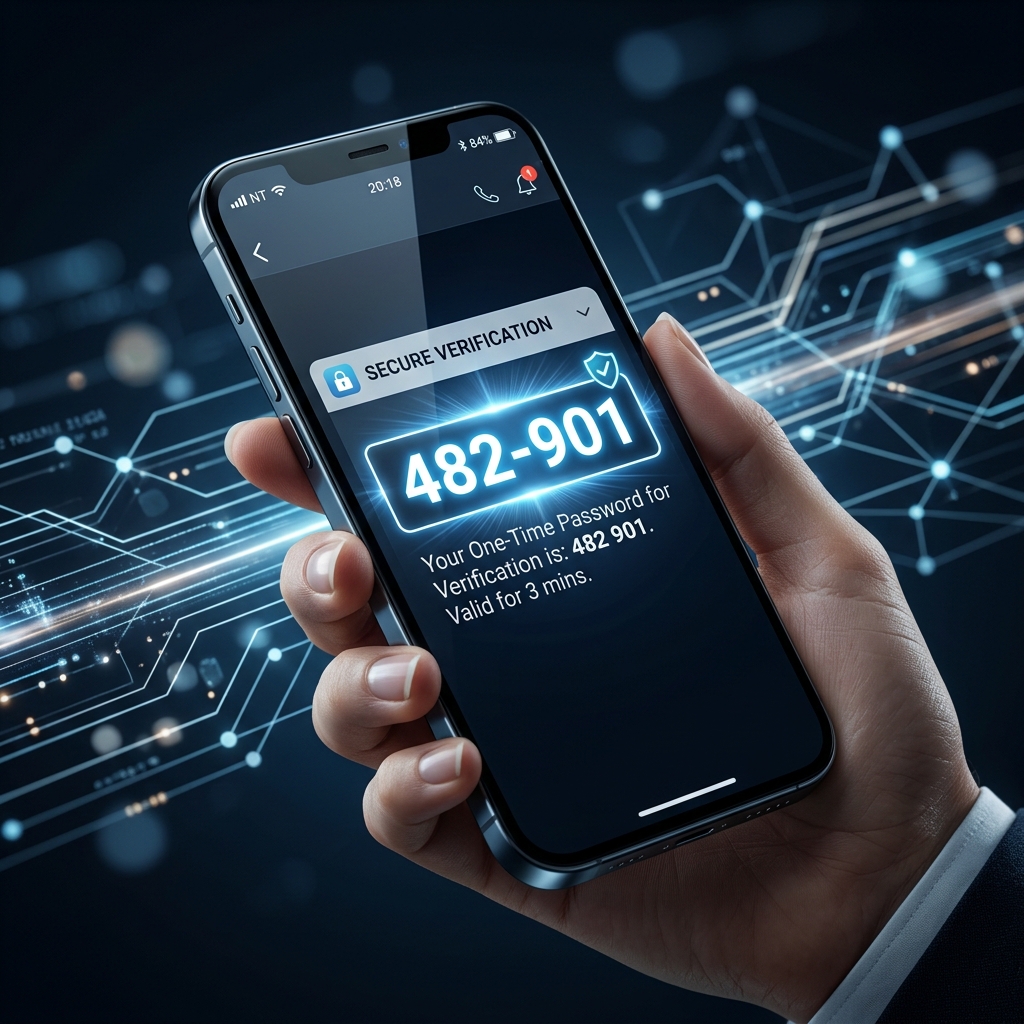
The promise of cryptocurrency is financial sovereignty — the ability to transact, hold, and move value without a central authority knowing who you are. In practice, the moment you sign up for any major exchange with your real phone number, that promise erodes significantly.
Your phone number is tied to your carrier account, which is tied to your legal name and billing address. Your exchange account is tied to your phone number. Your exchange account logs every deposit, withdrawal, and trade. Connect those three dots and a determined party — a data broker, a regulatory body, a hacker who obtained exchange data in a breach, or a malicious actor who obtained your phone number — has a detailed map of your crypto activity linked directly to your identity.
This is not a paranoid concern. Exchange data breaches have leaked millions of customer records including phone numbers and transaction histories. KYC databases are valuable targets. Phone numbers linked to exchange accounts are a well-documented vector for SIM swap attacks that drain wallets.
A virtual phone number severs the link between your real identity and your exchange account at the most practical point of vulnerability: the phone number itself.
How Your Phone Number Exposes Your Crypto Activity
Understanding the attack surface makes the solution clearer.
Exchange KYC databases are breach targets. Binance, Coinbase, Kraken, and every major exchange hold KYC data on millions of users — real names, addresses, government IDs, and phone numbers. This data has been leaked, sold, and subpoenaed repeatedly. When your real phone number is in that database, any future breach exposes both your identity and your complete transaction history on that platform.
SIM swap attacks target crypto holders. A SIM swap attack is when someone convinces your carrier to transfer your phone number to a SIM they control. With your number, they receive all your 2FA codes and can access exchanges, wallets, and email accounts. The crypto community is a disproportionate target because the potential payout is high and immediate. A virtual number from VRNUM — with no physical SIM that can be swapped — eliminates this attack vector entirely.
Phone number reverse lookups link identities. Your phone number alone is often enough to find your real name, address, and social profiles via commercial data broker services. Anyone who obtains your number from an exchange breach or data sale can build a profile of you.
Carrier records are subpoenable. Legal process directed at your carrier can compel them to produce records associating your number with a billing identity. If your carrier-linked number is in exchange records, that creates a chain: subpoena carrier → get name → subpoena exchange → get transaction history.
Data sharing between exchanges. Some exchanges share customer data for compliance and fraud prevention. Your phone number as a shared identifier links your activity across platforms even if you intended them to be separate.
What a Virtual Number Protects
Registering exchange accounts with a VRNUM virtual number instead of your personal number changes the picture:
- Exchange KYC database: Contains a virtual number with no carrier record linking it to your real name (VRNUM requires no KYC; your crypto payment to VRNUM has no identity attached)
- SIM swap: Cannot be performed on a virtual number — there is no physical SIM card to swap
- Reverse lookup: A virtual number is not in your name in any carrier or public database
- Carrier subpoena: Your carrier has no record of the virtual number — it is not on your account
- Cross-exchange data sharing: Virtual numbers are not linked across exchanges unless you use the same number everywhere (use separate virtual numbers for separate exchanges if this matters)
Which Crypto Platforms Accept Virtual Numbers
Most crypto exchanges accept virtual phone numbers for SMS 2FA, provided the number comes from a real mobile carrier allocation rather than a VoIP pool. VRNUM numbers return "mobile" in carrier type lookups.
Exchanges that work with VRNUM virtual numbers:
- Binance (international)
- Kraken
- KuCoin
- Gate.io
- Bybit
- OKX
- Most mid-tier and newer exchanges
Exchanges with stricter verification:
- Coinbase (US-focused, stricter KYC — may require a number matching your KYC country)
- Gemini (strict US compliance)
- US-regulated brokerages with full KYC requirements
For fully KYC-compliant exchanges like Coinbase, your phone number is one of several identity data points, and a virtual number does not circumvent the KYC process — it only protects the phone number link. For exchanges with lighter requirements, a virtual number combined with a non-identity email provides more comprehensive separation.
Setting Up Exchange 2FA with a Virtual Number
Step 1: Choose your number
Go to vrnum.com/countries and select a country. For most crypto exchanges, any country works. Match the country to the exchange's geographic restrictions if relevant (some exchanges restrict users from certain regions).
Choose a monthly subscription — not an OTP number. You will need the number long-term to receive 2FA codes every time you log in. An expired number means being locked out of your exchange account.
Step 2: Use it during exchange registration
When the exchange asks for a phone number during sign-up or 2FA setup, enter your VRNUM virtual number with the full country code.
Step 3: Receive the verification code in your dashboard
Open your VRNUM dashboard. The exchange's SMS code arrives in real time. Copy and enter it on the exchange.
Step 4: Keep the subscription active
Every time the exchange asks for a 2FA code — new device, new browser, suspicious login — the code will arrive in your VRNUM dashboard. As long as the subscription is active, access is uninterrupted.
Pairing Virtual Numbers with Other Crypto Privacy Practices
A virtual phone number is one layer in a broader approach to crypto privacy. For meaningful identity separation:
Non-identity email address: Use an email provider like ProtonMail or Tutanota, registered without personal information, for exchange accounts you want separated from your real identity.
Separate wallets: Exchange hot wallets (custodial) and self-custody cold wallets (hardware wallets, non-custodial software wallets) should be separate. Your exchange account links your identity (or virtual identity) to exchange-held funds only — not to your self-custodied wallets.
VPN or Tor for exchange access: Your IP address during login is logged by exchanges. A VPN or Tor connection prevents your IP from being directly linked to your home or office location.
Crypto purchased with privacy in mind: VRNUM accepts Bitcoin, USDT, Ethereum, Litecoin, and other cryptocurrencies. Paying for your virtual number with crypto that was not purchased via a KYC exchange (peer-to-peer, ATM with cash) keeps even the payment for privacy tools private.
Multiple virtual numbers for multiple exchanges: Using the same virtual number across all your exchange accounts defeats the purpose — it becomes a shared identifier. Use one dedicated virtual number per exchange account you want kept separate.
Virtual Numbers and SIM Swap Prevention
SIM swap attacks are among the most damaging threats to crypto holders. The attack works like this:
- An attacker gathers personal information about you (name, phone number, carrier — often bought from data breaches or social engineering)
- They contact your carrier, impersonate you, and convince them to port your number to a new SIM they control
- With your number, they receive all 2FA codes and gain access to your exchange, email, and other accounts
- They drain accessible funds and lock you out
High-profile SIM swap attacks on crypto holders have resulted in losses ranging from tens of thousands to millions of dollars.
A VRNUM virtual number eliminates the SIM swap vector because:
- There is no physical SIM card to swap
- There is no carrier relationship to social-engineer
- Your VRNUM account is protected by your VRNUM credentials, not by carrier customer service
For maximum security, treat your VRNUM account password with the same rigor as your exchange password — use a unique, strong password stored in a password manager, and enable any available 2FA on the VRNUM account itself.
The Limits of This Approach
Being clear about what a virtual number does and does not do matters:
Does: Severs the link between your real carrier-linked phone number and your exchange account. Eliminates SIM swap attack surface. Prevents carrier-record-based identity tracing of the phone number specifically.
Does not: Circumvent KYC identity verification if the exchange requires government ID. Replace a VPN or Tor for IP anonymity. Make on-chain transactions private (that is a function of the blockchain and the wallet, not the phone number). Make fully KYC-compliant exchanges anonymous.
For exchanges that require photo ID as part of KYC, your identity is known to the exchange regardless of the phone number used. The phone number protection still matters — it removes the SIM swap vector and the carrier data subpoena vector — but it does not make the account anonymous.
Get a virtual phone number for your crypto accounts → Learn about anonymous phone number setup →
Get a Virtual Phone Number
Instant activation · 50+ countries · Monthly or yearly plans
Browse Numbers